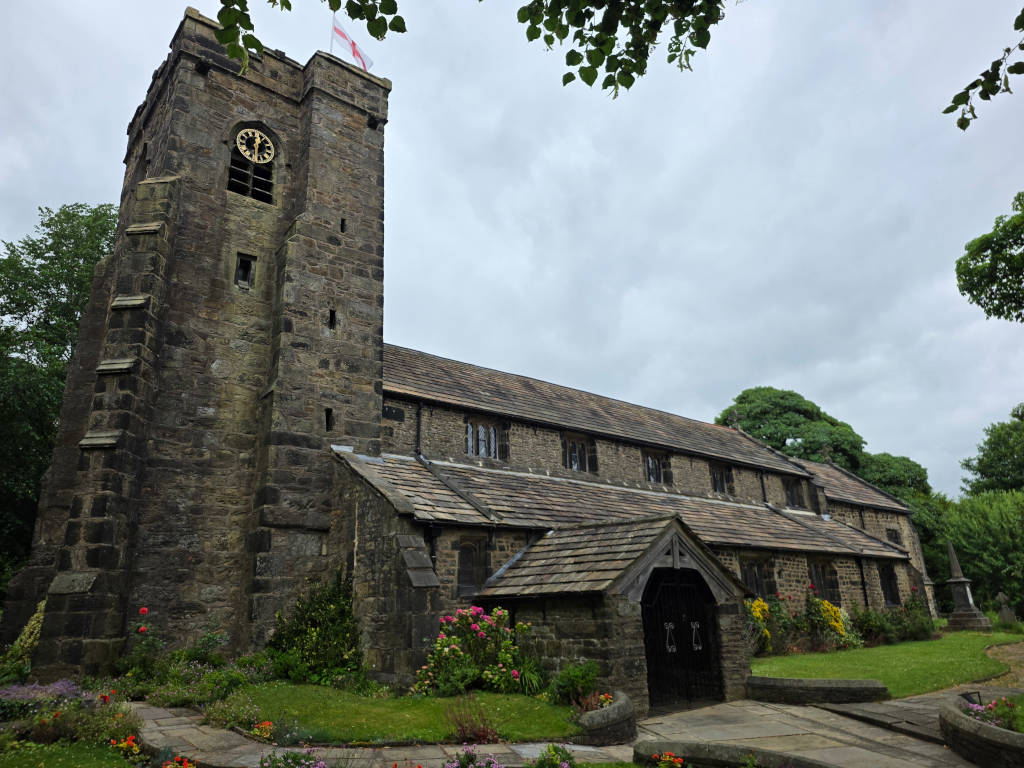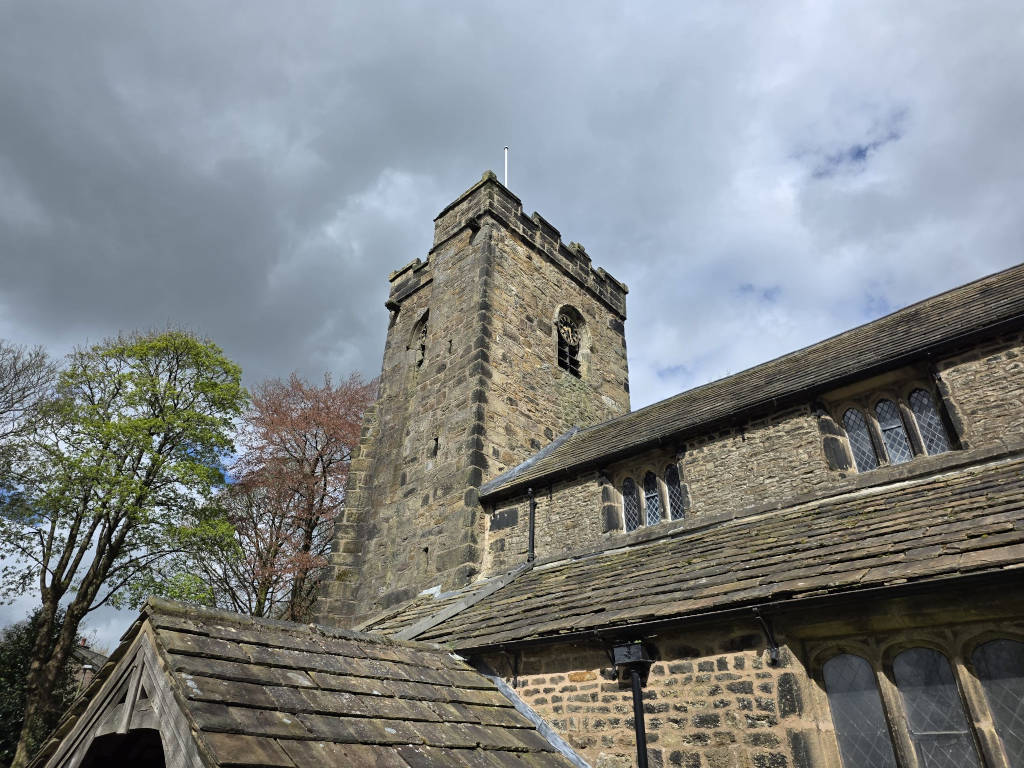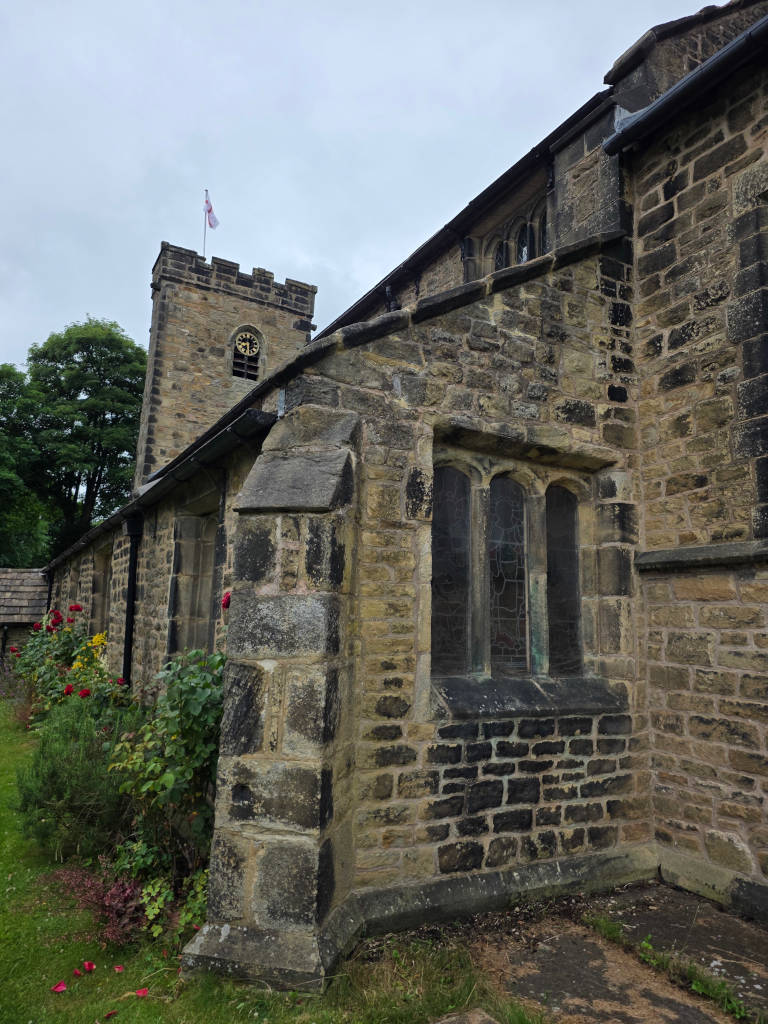
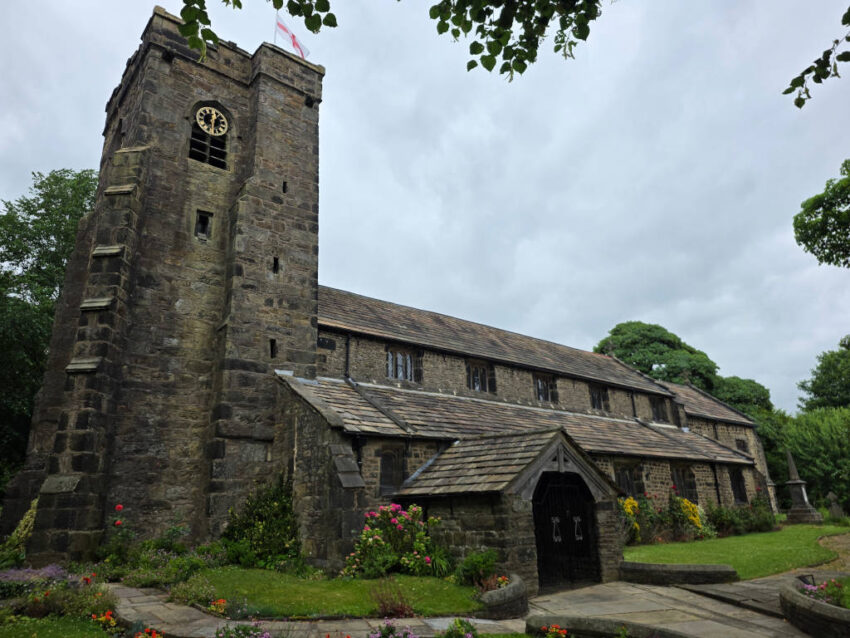
The Grade II Listed St Bartholomew’s church in Great Harwood required conservation to maintain its architectural character and prevent further deterioration. Previous maintenance works had included areas of cement mortar pointing, which were incompatible with the original traditional construction methods.
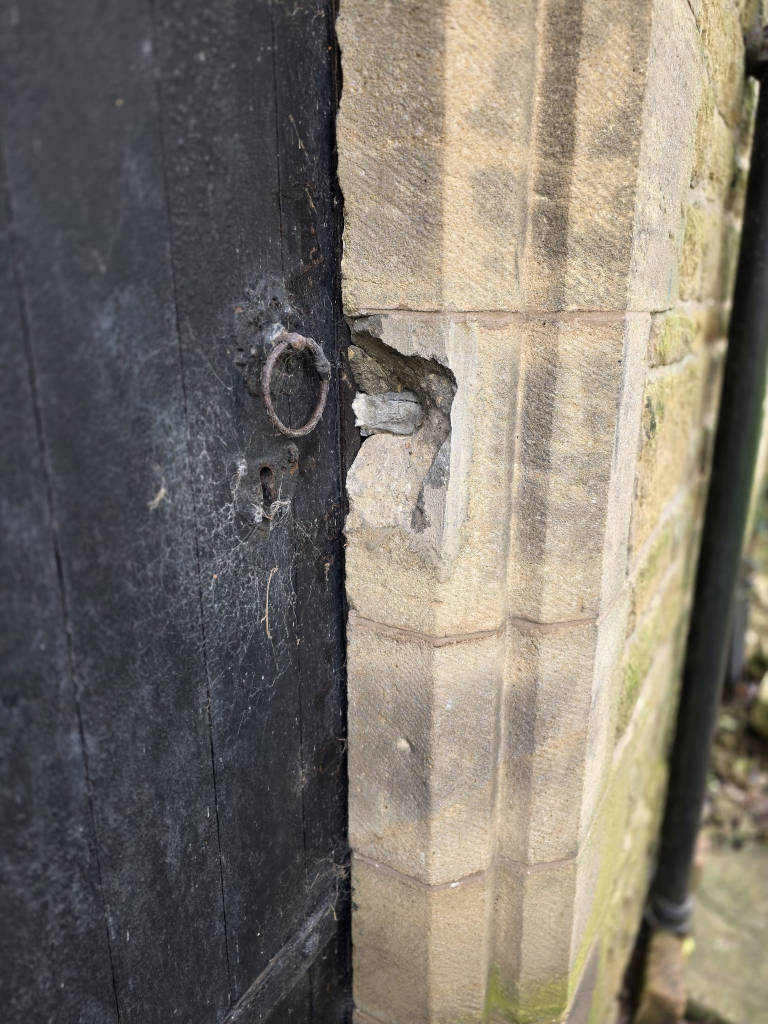
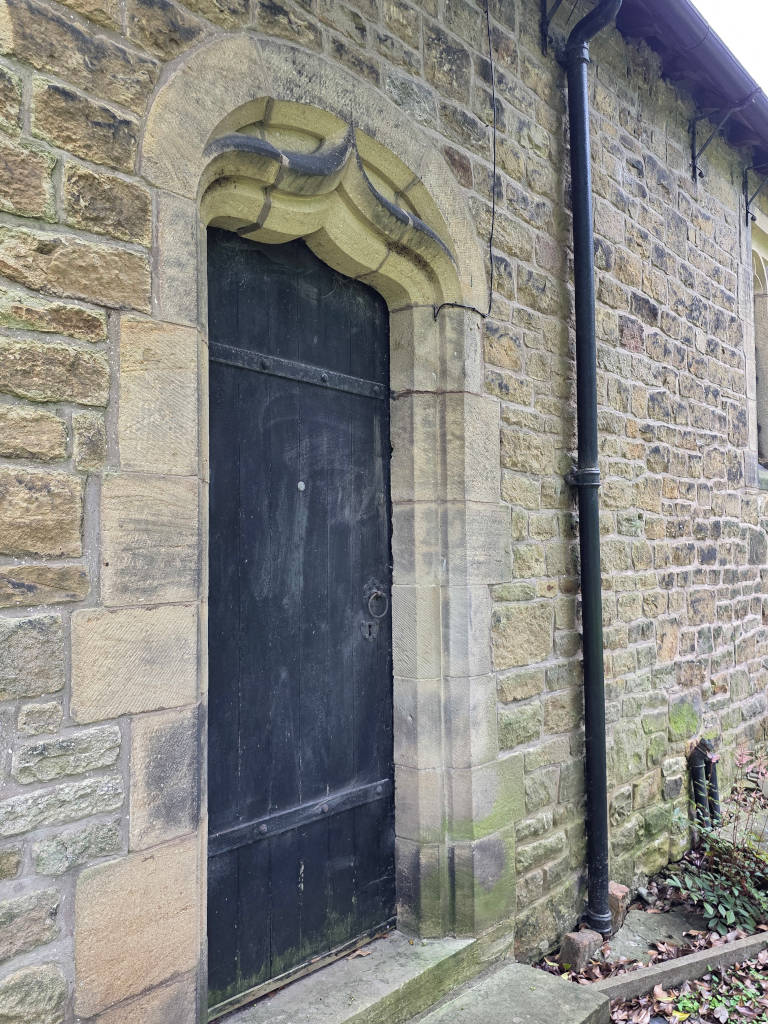
Following a break-in, an entrance doorway stone sustained impact damage, resulting in cracking and loss of material to one of the doorframe jamb stones. A programme of sympathetic repairs was required to reinstate the damaged fabric while preserving as much original material as possible.
Patch Repointing Open Mortar Joints
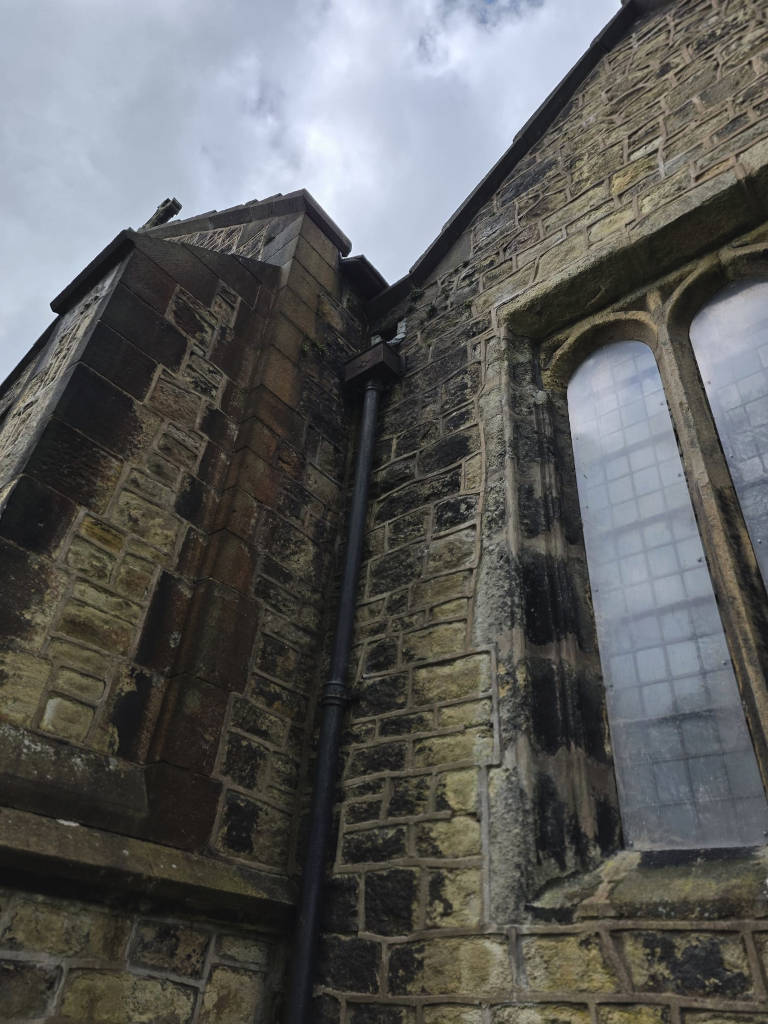
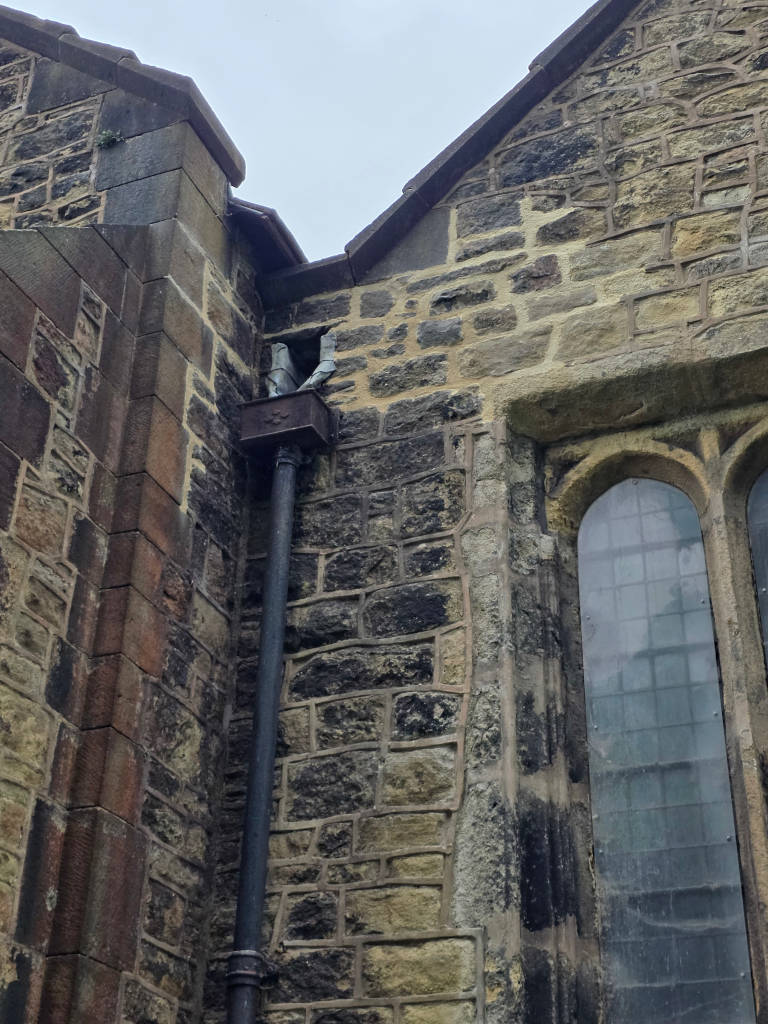
- Localised areas of failing mortar joints existing, specifically to: the Aisle roof abutment, End Aisle copings, Internal Tower Parapet and featured vegetation around the lead outlet.
- Previous cement-based pointing was excessively hard and restricting the natural movement and breathability of the stonework.
- Open joints allowed increased water penetration and accelerated weathering.
- Areas with defective mortar was causing erosion to surrounding stone edges.
Stone Damage
The stone door surround had been damaged during a forced entry incident:
- A section of the stone frame had fractured and lost integrity.
- Existing stonework showed impact damage inconsistent with natural weathering.
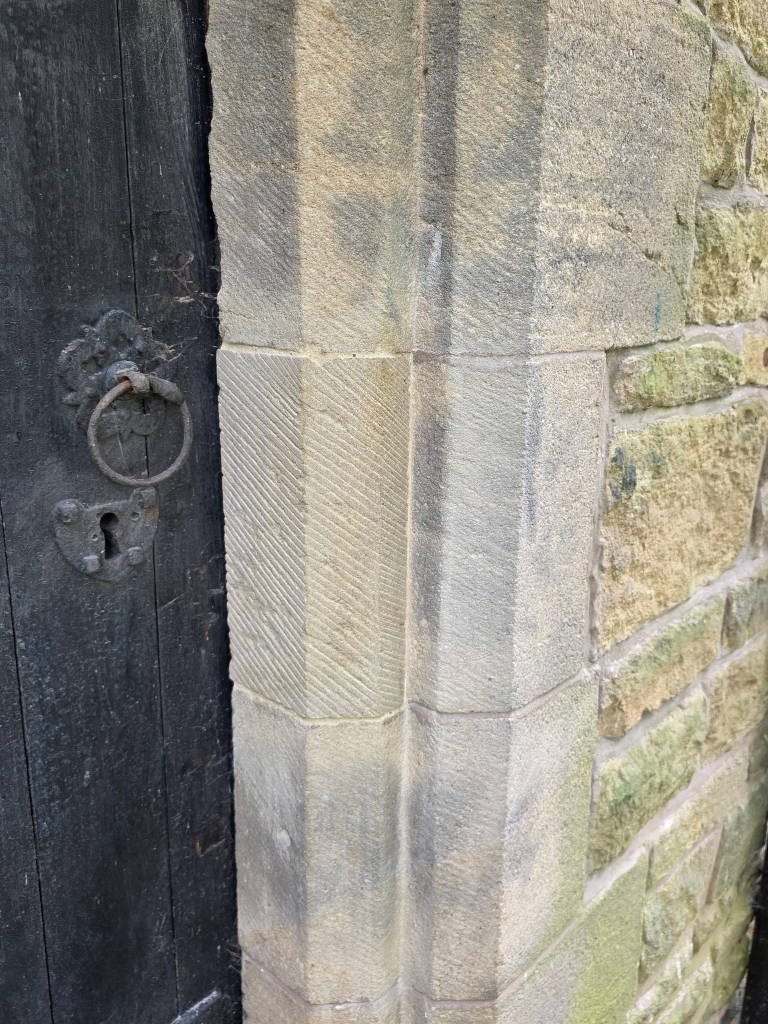
- The repair required careful matching of the existing stone type, profile, tooling marks and weathered appearance.
Repair Strategy
1. Removal of Defective Cement Mortar
Where cement pointing had failed or was considered harmful:
- Cement mortar was carefully removed by hand tools to avoid damaging the historic masonry arises.
- Mechanical methods were avoided where possible to reduce vibration and accidental stone damage.
- Joints were cleaned and prepared ready for traditional lime mortar repointing.
2. Patch Lime Repointing
Selected areas were repointed using a compatible lime mortar, with works including:
- Careful preparation of open joints.
- Damping of masonry before application to control suction.
- Application of lime mortar in layers where required (deep fill packing).
- Finishing joints to match the original profile and texture.
- Protection of fresh mortar during curing to prevent rapid drying and shrinkage.
The lime mortar provided:
- Improved compatibility with the historic stone.
- Increased breathability.
- Reduced risk of trapped moisture and frost damage.
- A finish sympathetic to the age and character of the church.
3. Replacement of Damaged Jamb Stone
Due to the severity of the break-in damage, a damaged stone jamb of the doorframe required replacement, this process involved:
- Careful removal of the unstable damaged stone.
- Surveying the existing profile and dimensions.
- Selection of a matching replacement stone with similar colour, density and weathering characteristics.
- Hand dressing of the new stone to replicate the original mouldings and finish.
- Installation using appropriate bedding materials compatible with the historic fabric.
- Final lime mortar pointing and finishing to integrate the repair.
Outcome
The completed works successfully:
- Restored the damaged entrance doorway following the break-in.
- Improved the durability of surrounding masonry.
- Removed harmful cement repairs to the identified areas and replaced them with compatible lime mortar.
- Preserved the architectural character of the listed church.
- Ensured the repairs were visually sympathetic and in keeping with conservation standards.